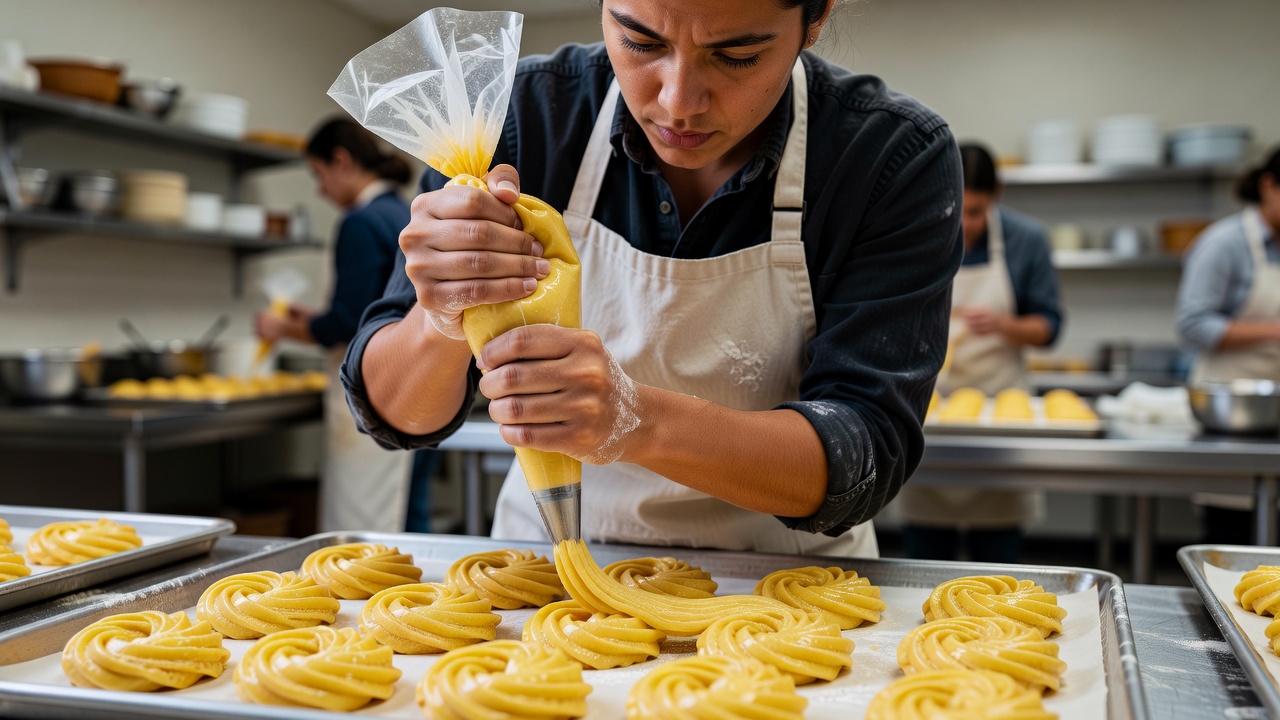
The three pastry tiers
Beginner · Shortcrust & sponges
Rubbing butter into flour, bringing dough together with as little water as possible, resting it, rolling it evenly and blind baking a tart case without shrinkage. Cake beginners learn creaming, folding and how to tell a sponge is done. If soggy bottoms or sunken cakes are your problem, start here.
Improver · Choux & custards
Pâte à choux cooked on the hob, then beaten with egg until it falls from the spoon in a slow V. You'll pipe éclairs and profiteroles, make crème pâtissière and learn why the oven door stays shut. Rough puff pastry often appears here too.
Advanced · Laminated & layered
Croissants and Danish pastries mean folding a butter block into dough in a series of turns, chilling between each. Advanced cake classes cover layered entremets, glazes and stable buttercreams. Expect two days or more, because lamination can't be rushed.
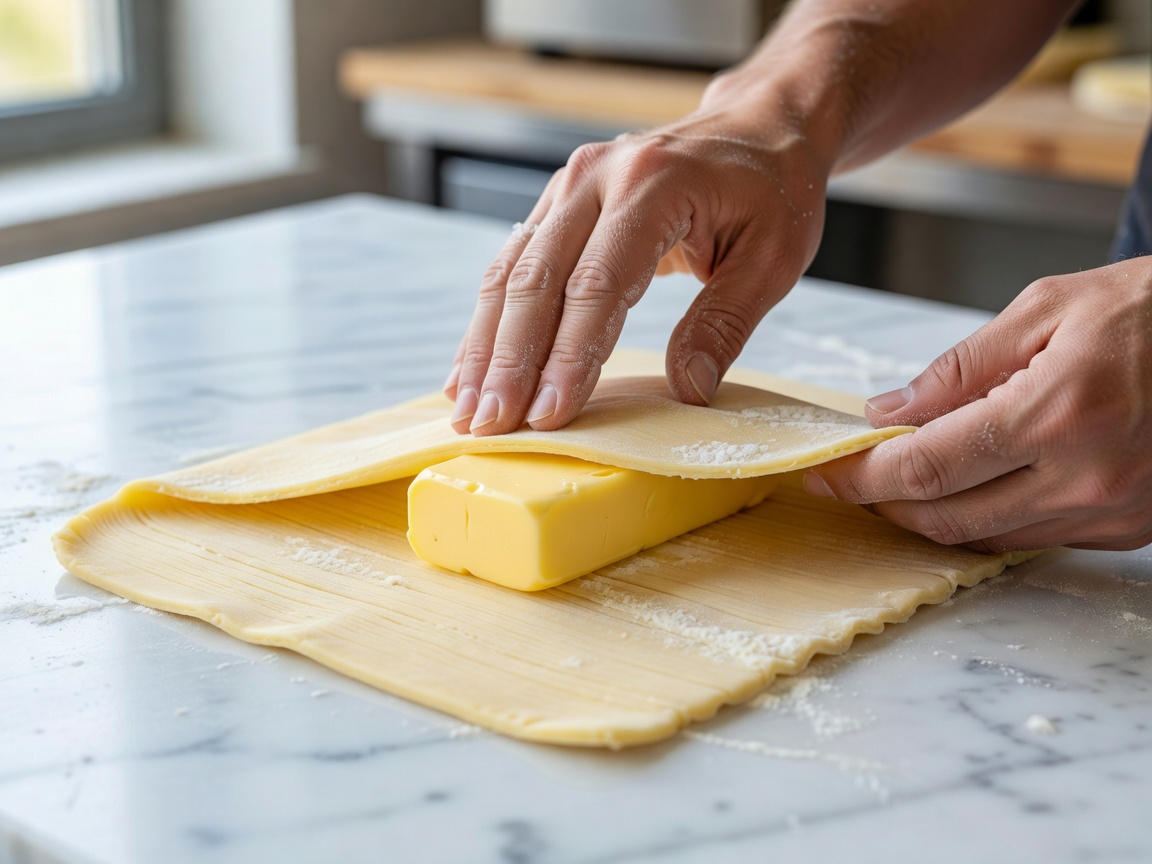
Cold hands, cold bench
Ask what the benches are made of. Marble or steel stays cool and keeps butter firm. A warm wooden bench in a summer kitchen makes laminated pastry far harder.
Piping counts as practice
Ten minutes of piping onto a tray, scraping it back and piping again teaches more than one perfect row. Good tutors build that in.
Questions for the school
- Do I laminate my own dough? Watching the tutor's turns isn't the same as doing them.
- How will bakes travel home? Boxes for cream-filled pastries are a small mercy.
- Gas or electric, fan or not? Useful when you translate times back home.
- Any recipes in grams? Pastry works best weighed, not measured in cups.
Where to look
For classical French pastry, Le Cordon Bleu's short pâtisserie workshops show you the school's method without committing to a diploma. Leiths in London runs short courses that suit confident home cooks. King Arthur Baking School covers pies, tarts and pastry for an American kitchen. Many independent pâtisseries also open their kitchens on quiet mornings.
Reference The Cake Bible by Rose Levy Beranbaum is a careful, weighed guide for cake improvers.
How to tell you're ready to move up
You're ready for the improver tier when your shortcrust rolls without cracking, your tart case keeps its shape and you understand why you rested it. You're ready for advanced when choux rises reliably and you can rescue a split custard. If you're still guessing on those, there's no rush. One more beginner class with a different tutor often unlocks things faster than leaping ahead.
One common trap: "Patisserie masterclass" on a course title doesn't always mean advanced. Read the recipe list, not the headline. If it's mostly cupcakes and shortbread, it's a lovely day out, but it isn't a step up.
Before pastry, a short knife skills class pays off more than you'd expect, since neat fruit and tidy trimming finish a tart. And if travel is tricky, see which pastry topics work in an online format.