
The three knife and savoury tiers
Beginner · Grip and five cuts
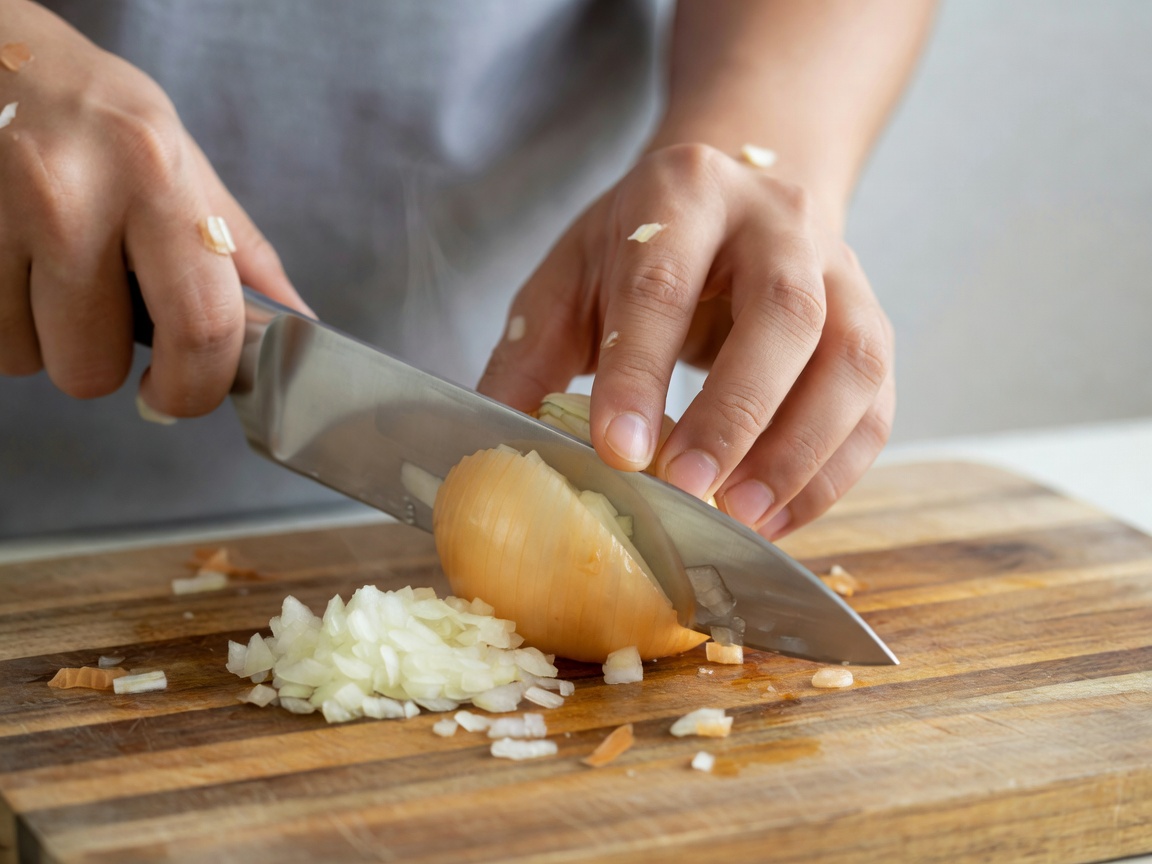
A two- to three-hour session. You learn to hold the knife with a pinch grip on the blade, to guide food with a curled "claw" hand and to use the bridge hold for halving. Then the cuts: slicing, dicing an onion, julienne, a fine brunoise and chiffonade for herbs. Most classes finish with a simple dish that uses everything you chopped.
Improver · Sharpening & stocks
Honing versus sharpening, a whetstone session with coarse and fine grits, and keeping an edge at home. Then breaking down a whole chicken, making stock from the bones and turning it into a sauce or soup. This is where savoury cooking starts to feel joined up.
Advanced · Sauces & butchery
The classic French mother sauces codified by Escoffier, filleting round and flat fish, and seasoning by taste rather than recipe. Often run over several days, sometimes as part of a longer certificate.
Bring your own knife?
Some knife classes invite you to bring your chef's knife so you learn on the tool you'll actually use. If so, wrap it in a tea towel and carry it in a closed bag.
Western or Japanese?
Ask the tutor to let you try both a Western chef's knife and a Japanese gyuto. The feel is quite different, and it's better to discover that before you buy one.
Signs of a good knife class
- A board per person. Sharing a chopping board is a safety issue, not just an inconvenience.
- Lots of veg to cut. Repetition is the whole point. A single carrot each isn't enough.
- First aid on hand. Small nicks happen; a calm tutor with plasters matters.
- Sharpening covered. Even ten minutes on honing helps your knife last.
Reading after class
Beginner Salt, Fat, Acid, Heat by Samin Nosrat explains why seasoning works, which is perfect after your first savoury class.
Advanced The Professional Chef from the Culinary Institute of America covers cuts, stocks and sauces in depth.
Treat both as companions to practice, not substitutes for it.
Practise without wasting food
The common worry after a knife class is "what do I do with all those diced onions?" Plan practice around meals you'd cook anyway. A soup or a ragù on Sunday is a dicing session in disguise. A stir-fry is julienne practice. A herb salad is chiffonade. Do one cut properly each time rather than all of them badly.
Many general cookery schools, including Leiths and Ballymaloe, fold knife work into their beginner short courses, while community colleges and cookware shops often run inexpensive evening sessions. The expensive version isn't always better; what matters is how much cutting you do and how closely someone watches your hands.
Once your knife work is steady, the bread and pastry stations feel easier too, as tidy prep makes any class calmer. Unsure whether to learn this online? Read our format comparison; for knives, we gently suggest being in the room.