The six formats side by side
| Format | Typical length | Best for | Watch out for |
|---|---|---|---|
| Recorded online | Self-paced | Beginners wanting recipes and theory | No one checks your dough or grip |
| Live online | 1–3 hrs | Improvers with a decent home kitchen | Camera angles; tutor sees little |
| One-day in person | 3–7 hrs | Trying a topic, learning feel | Pre-mixed doughs, shared ovens |
| Weekly evening series | 4–10 weeks | Steady skill building with practice between | Missing a week breaks the thread |
| Residential / holiday | 2 days – 2 weeks | Deep focus, improver to advanced | Travel and lodging add up |
| Professional diploma | Months | Career changers | Overkill for most home cooks |
When online works well
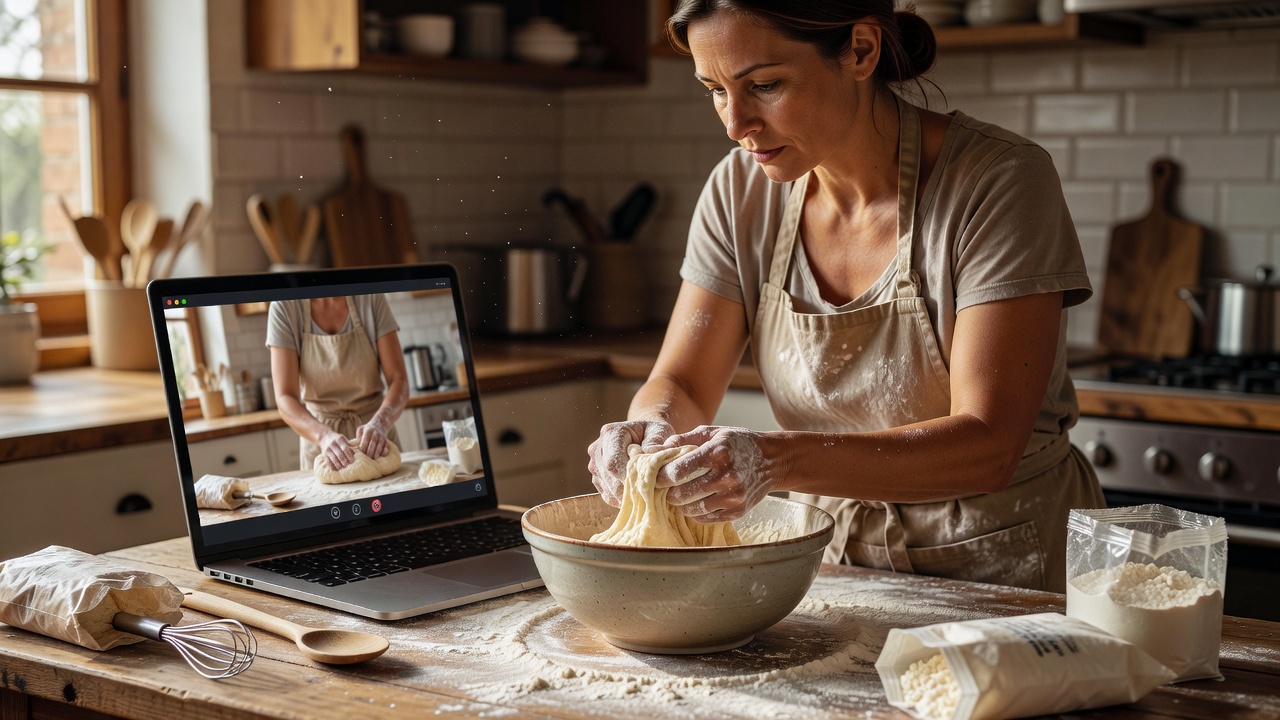
Online classes are strong for anything where the main hurdles are timing and order: planning a sourdough schedule, assembling a layer cake, cooking a menu that has to land all at once. Live sessions let you ask questions in the moment, and recordings let you replay the tricky bit three times.
Set up before the class starts: scales out, ingredients weighed, phone or laptop positioned so the tutor can see your bench rather than your face. King Arthur Baking School and many smaller teachers run live online baking this way.
When to be in the room
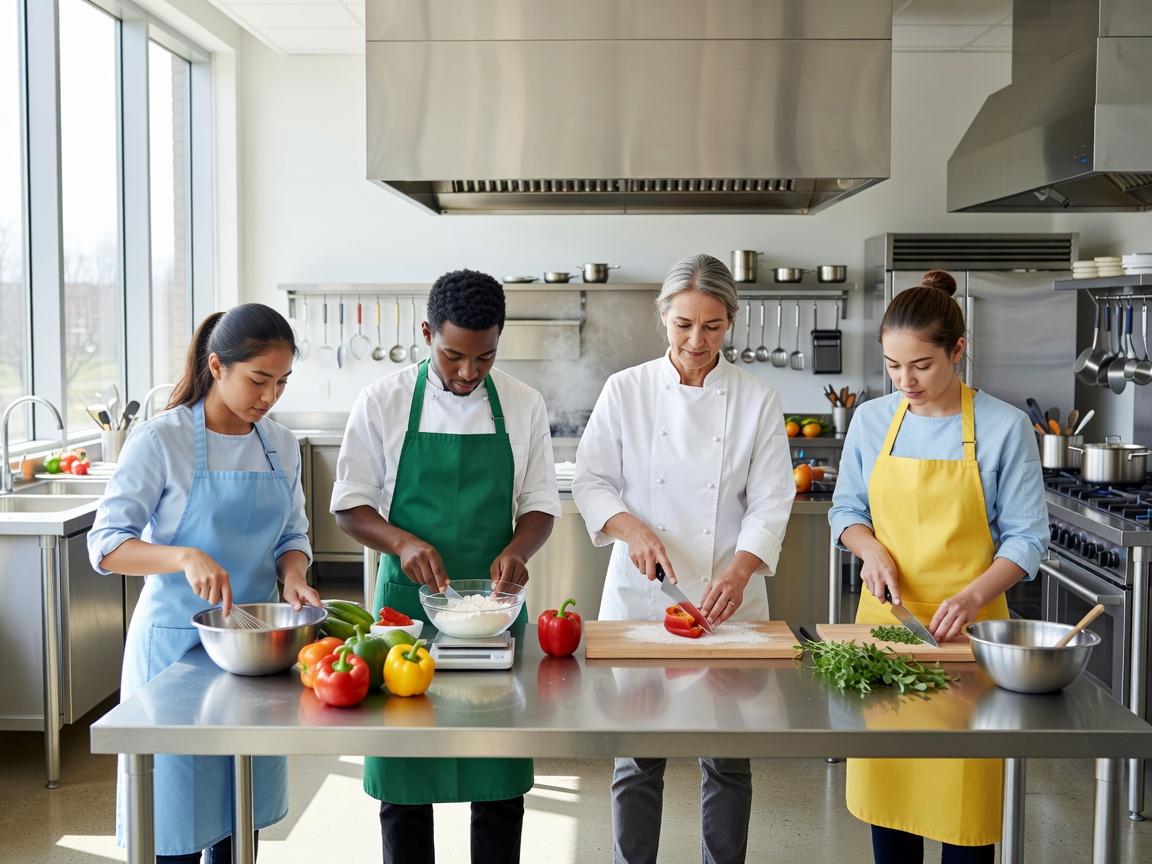
Anything that depends on feel: kneading, laminating butter, the claw grip, judging choux consistency. A tutor standing beside you sees the problem before you do.
Weekly beats one-off
For improvers, a weekly series often teaches more than one long day, because you practise at home between sessions and bring back real questions.
Residential courses
A few days away, with no work email, means you cook, eat and talk food all day. Ballymaloe in Ireland and many countryside schools run short residential courses alongside longer certificates. They suit improvers who want a big jump, and they're memorable. Just budget for travel and lodging, which can cost more than the tuition.
Do home cooks need a diploma?
Rarely. Diplomas from Le Cordon Bleu, Leiths or the CIA are built for people heading into professional kitchens: long hours, assessments and costs to match. If you love cooking but aren't changing careers, a run of well-chosen short courses will teach you more of what you want for far less money.
A simple way to decide
- Beginner? Try a recorded or live online class first to learn the vocabulary, then one in-person day for feel.
- Improver? A weekly series or a two-day in-person course gives you practice with feedback.
- Advanced? Residential or specialist multi-day courses with a small group and expert tutor.
- Short on time? Live online, with ingredients prepared in advance, wastes the fewest minutes.
Now choose your topic: bread, pastry or knife skills. Still unsure? The bench questions cover cancellations, dietary needs and class sizes.