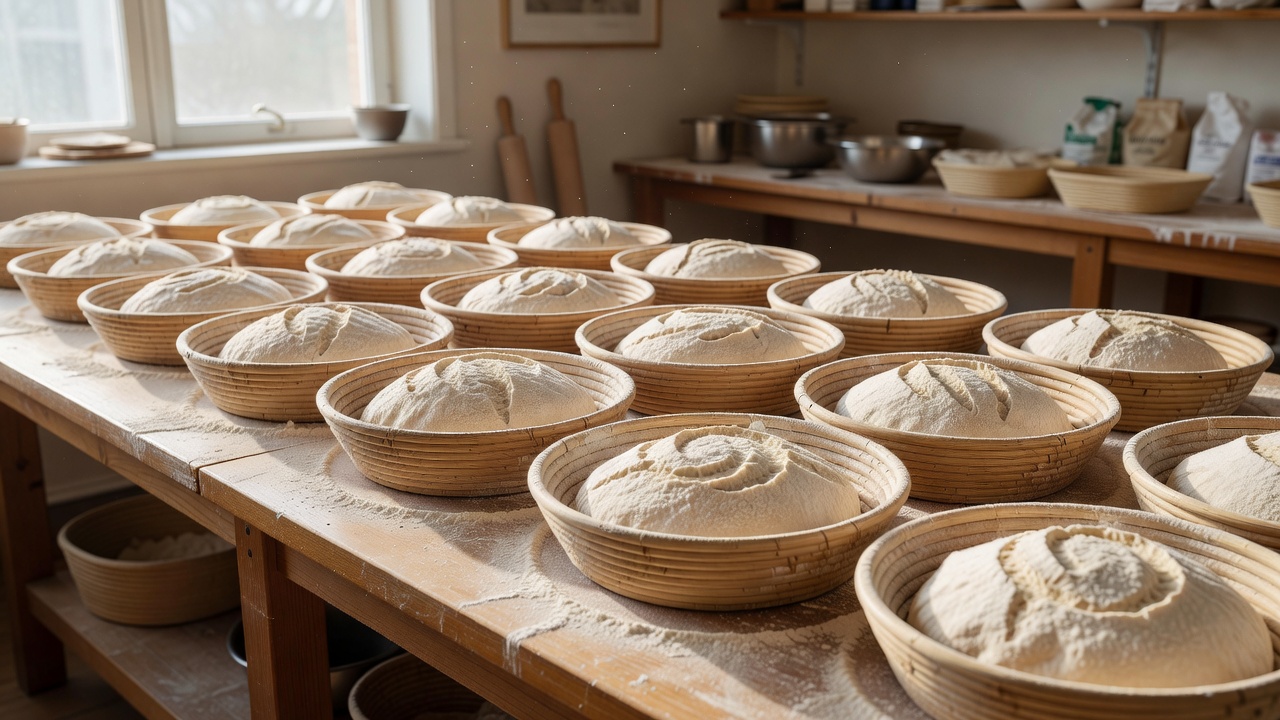
Start here: the three bread tiers
Beginner · Yeasted basics
Usually a single day of three to five hours. You weigh, mix, knead and shape a simple white or wholemeal loaf, a tray of rolls and often a focaccia. A good beginner class shows you the windowpane test for gluten, how to shape a tight round, and how to tell a loaf is baked by its hollow knock and colour rather than the clock.
Improver · Sourdough foundations
For people who already bake yeasted bread and want more flavour and a more open crumb. Expect feeding a starter, building a levain, resting flour and water before adding salt, stretch-and-folds and reading bulk fermentation by look and feel. Doughs are wetter than you're used to, which is exactly why a tutor beside you helps.
Advanced · Shaping and scheduling
Baguettes, rye, enriched doughs like brioche, and scoring that opens properly. Multi-day courses here teach you to rest dough in the fridge overnight so bread fits your week, and how to get steam into a home oven.
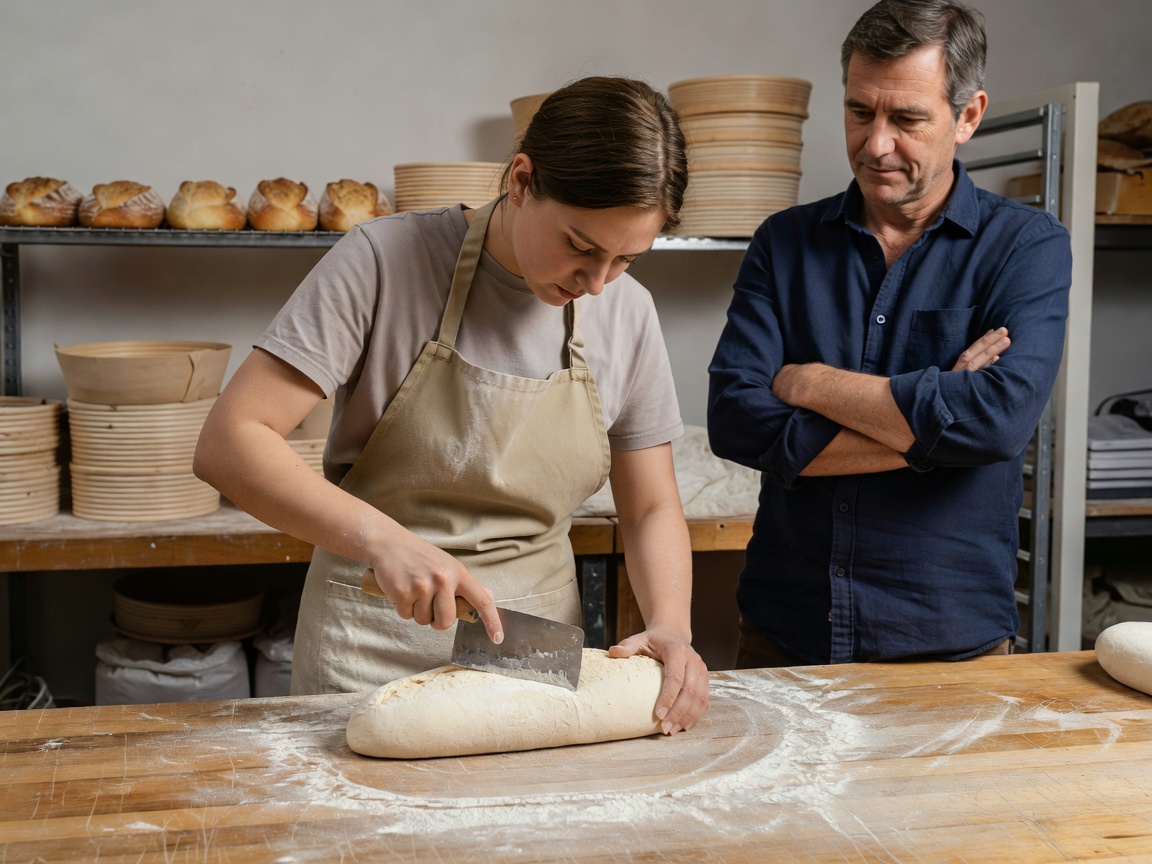
The dough swap is normal
Sourdough can take a day or more to ferment, so many one-day classes hand you dough the tutor mixed the night before. That's fine. Just ask whether you'll also mix a batch from scratch to take home and finish yourself.
Bake it three times
Within two weeks of the class, bake the same loaf three times. The first follows your notes, the second fixes one thing, the third is yours. Don't jump to a new recipe yet.
Read the course page like a baker
- Starter to take home? A pot of healthy starter saves you a week of fuss.
- Ovens per student. Bread needs oven time; four people to one oven means waiting.
- Flours used. If the class uses specialist flour, ask where to buy it locally.
- Shaping practice. More than one loaf to shape is a very good sign.
Books worth packing
Pick one and stick with it after your class, so your notes and the book speak the same language.
Improver Flour Water Salt Yeast by Ken Forkish: clear schedules for home ovens.
Improver Tartine Bread by Chad Robertson: the country loaf many sourdough classes are built around.
Advanced Bread by Jeffrey Hamelman: a baker's textbook with formulas in baker's percentages.
Where bread classes shine
Baking-only schools such as King Arthur Baking School in Vermont build whole classes around one dough, which suits improvers who want depth. Ballymaloe in County Cork runs short bread courses alongside its longer certificate, often with flour and butter from the farm itself. And don't overlook the neighbourhood bakery that runs Saturday sourdough mornings: you're learning in a working bakery, from someone who shapes hundreds of loaves a week.
Whatever you choose, ask how hot the kitchen runs. Dough moves faster in a warm room, and a good tutor will explain how to adjust timings when you're back in a cooler kitchen at home. That single conversation is often worth the fee.
Ready for something richer? Move on to the pastry station, or check whether an online bread class suits you better.